
What is shearling, and how is it different from sheepskin?
Walk through any winter collection and you will see the word shearling on coats, boots, slippers and chairs. Walk through another and the same material is called sheepskin. A third calls it lambskin. All three words are doing slightly different jobs, and only one of them tells you anything useful about quality.
Here is what the terms actually mean, and what to look at before you spend money on any of them.
Shearling is a sheepskin with the wool left on
Shearling is a hide from a sheep or lamb that has been tanned with the wool still attached, then shorn to an even length. You end up with a single piece of material that has suede on one side and dense wool on the other.
That is the whole definition. Shearling is not a weave, not a blend, and not a finish applied to a fabric. It is one animal hide, processed so that both faces stay usable.
The name comes from the shearing step. The wool on a raw hide grows unevenly, so a tanner shears it to a consistent depth, usually somewhere between half an inch and an inch for garments. Longer for a rug, shorter for the lining of a boot.
So what is the difference between shearling and sheepskin?
In practice, very little. Sheepskin is the broader word: any tanned sheep hide with the wool on. Shearling is a sheepskin that has been shorn to an even pile, and the word is used most often when the material is being made into something you wear.
A useful rule of thumb:
- Sheepskin tends to describe the hide in its own right, especially when the wool is left long and natural. A sheepskin rug keeps its full character, including the organic edge of the hide.
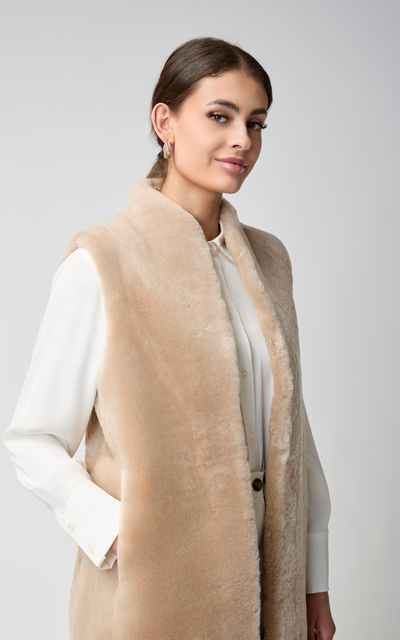
- Shearling tends to describe the same material once it has been shorn level and cut into panels for a coat, a vest or a pair of slippers.
- Lambskin means the hide came from a young animal. The wool is finer and the leather is thinner and more supple, which is why it turns up in gloves and lighter jackets.
None of these words is a quality marker on its own. A poor shearling and an excellent shearling are both called shearling.
How to tell good shearling from bad
Four things separate a hide that lasts twenty years from one that sheds within a season.
1. Density of the wool
Press your palm into the wool and let go. Good shearling springs back and the fibers stand up again. Thin or over stretched hide stays flattened, and you can often see the leather through the wool when you part it with your fingers.
2. The leather side
Turn the piece over. The suede should feel even and slightly waxy, not papery or stiff. Stiffness usually means the hide was dried too hard, and it will crack at the fold lines.
3. Whether it is one hide or many
A coat made from several small offcuts sewn together will have seams running in unexpected places and the wool direction will change across the panels. On a rug it is more obvious still: a single skin has one organic outline, while a larger rug is two or more skins joined. Neither is wrong, but you should know which you are buying, and larger pieces made from a single hide are rarer and cost more.
4. What it was treated with
This one you cannot see. Our sheepskins are tested by TUV SUD and carry the Oeko-Tex Leather Standard, which means they have been checked for chromium 6, formaldehyde, banned aromatic amines and a list of other substances you would not want on a rug your child sits on. If a seller cannot tell you how a hide was tanned, that is worth noticing.
Where shearling works best
Wool is a remarkable insulator because it traps air rather than blocking heat. It also handles moisture well, absorbing up to about a third of its own weight before it feels damp. That combination is why shearling turns up in the places it does.
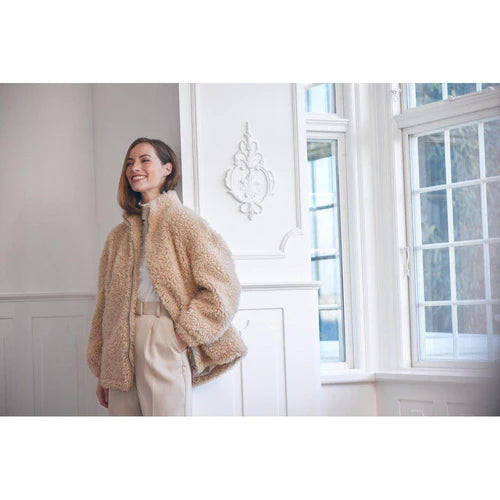
On your body. Our jackets, vests and ponchos use shearling with the wool turned inward, so the suede takes the weather and the wool sits against you. It is warm without the bulk of a padded coat.
Underfoot and on furniture. Left longer and unshorn, the same material becomes a rug or a seat cover. Our sheepskin rugs run from a single skin that fits a dining chair up to multi skin rugs for a living room floor.
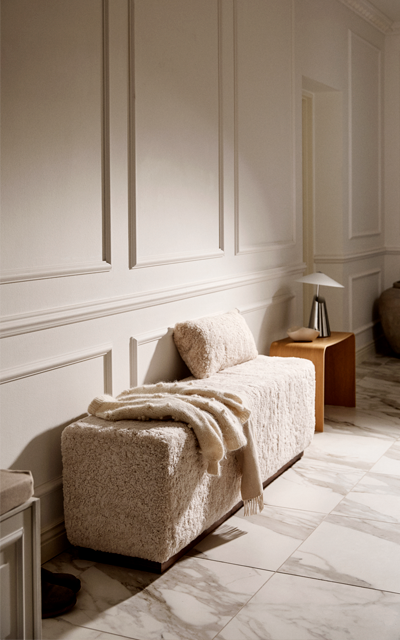
As upholstery. This is where shearling stops being an accessory. Our sheepskin chairs are upholstered in whole hides rather than trimmed panels, which is why the wool runs unbroken across the seat and back. If you have searched for a shearling chair and found mostly small accent pieces, this is the difference.
A note on care
Shearling does not need much. Shake it out, brush the wool in the direction it grows, and keep it out of direct sunlight where the color can fade unevenly. It should never go in a washing machine or a tumble dryer, and it should never be soaked, because water strips the natural lanolin that keeps the leather supple.
Our full care guide covers the details, including what to do about a spill.
The short version
Shearling is a real sheep hide with the wool tanned onto it and shorn level. Sheepskin is the same thing in broader terms. Lambskin is a younger, finer version. What matters is not which word is on the label but how dense the wool is, how supple the leather is, whether it is one hide or several, and what it was treated with.
If you are not sure which is right for what you have in mind, get in touch. We would rather talk it through than have you order the wrong thing.