


What is cowhide, and is it worth the money?
Cowhide is the skin of a cow, tanned with the hair still on it. That is the short answer, and it is worth stating plainly because the word gets used loosely enough that people are often unsure whether they are buying a rug, a piece of leather, or something printed to look like both.
Cowhide with the hair on, and cowhide leather
The same raw material goes down two different roads at the tannery.
Hair on cowhide keeps the coat intact. The hide is cleaned, tanned and finished, and what you end up with is the animal's own markings, in its own shape. This is what a cowhide rug is.
Cowhide leather has the hair removed. What remains is the dermis, which is then tanned and finished into the material used for bags, upholstery, shoes and belts. When people ask whether cowhide leather is good, they are usually comparing it to sheepskin or goatskin. Cowhide is the thickest and toughest of the three, which makes it the most durable and the least supple.
Both are real cowhide. They just answer different questions.
Why no two hides are the same
A cow grows its own pattern, and the tannery cannot change it. Brindle, tricolor, black and white, solid brown, salt and pepper: these are descriptions of what the animal looked like, not product options someone chose from a chart.
That has three practical consequences when you buy one.
- Size varies. Hides are measured in area rather than fixed dimensions, and a large hide and a small one from the same herd can differ by a third.
- Markings vary. If you order a black and white hide, you will get black and white, but not the exact arrangement in the photograph unless the listing is for that specific hide.
- Small marks are normal. Scars, brand marks and slight variations in hair length are part of a natural hide. On a genuinely poor hide they will be extensive; on a good one they are incidental.
How to judge a hide
Feel the hair
Good cowhide has a smooth, dense coat with a distinct shine. Run your hand along the grain and then across it. It should feel silky one way and slightly resistant the other. Dull, dry or patchy hair usually means an older hide or a poorly finished one.
Turn it over
The suede side should be even in color and soft to the touch, without hard patches or a papery feel. Stiffness means the hide was over dried, and that leads to cracking along the fold lines later.
Check the edges
The outline should be trimmed cleanly and should still look like a hide, with the natural shape intact. A hide cut into a rectangle has usually lost the best of the coat in the process.
Ask where it came from
Most of the hides in our range are Brazilian. Brazil produces the majority of the world's decorative cowhide and has the climate and herd size to do it consistently. Provenance is not a guarantee of quality on its own, but a seller who cannot answer the question is telling you something.
Is a cowhide rug durable?
More than almost anything else you could put in the same spot. The hair is short and lies flat, so there is no pile to flatten and no fibers to matt. Cowhide handles hallways, dining rooms and high traffic living rooms comfortably, and it does not show footprints the way a cut pile carpet does.
It is also easy to keep clean, provided you never soak it. We have written a full guide on how to clean a cowhide rug if you want the detail.
Where cowhide is not the answer: bathrooms, entryways that get wet, and anywhere it will sit in standing moisture.
Is it sustainable?
Hides are a byproduct of the meat industry. The animal is not raised for its skin, and if the hide is not used it is waste. Turning it into something that lasts decades is a better outcome than the alternative, which is why we work with hides rather than printed synthetics.
It is worth saying that a real hide will also outlive several synthetic rugs, and a synthetic rug is a petroleum product that does not break down at the end of its life.
What cowhide costs, and why
Price on a hide tracks size, the rarity of the markings, and the quality of the finish. A small solid colored hide is the entry point. Large hides, and unusual patterns such as brindle or a well defined tricolor, cost more because fewer animals produce them.
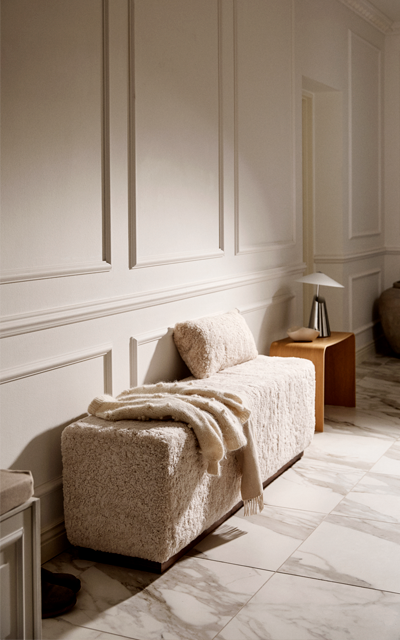
Beyond rugs, the same material turns up in our benches and stools, where a hide is stretched over an oak frame. It wears extremely well as a seat, which is the whole argument for cowhide in one object.
The short version
Cowhide is a real animal skin tanned with the hair on. Cowhide leather is the same skin with the hair removed. Neither is a synthetic, both are durable, and the only real quality signals are the density and shine of the hair, the suppleness of the suede side, and whether the hide has been left its natural shape.
Every hide is different, so if you want help picking one, tell us the room and the size and we will send you options.